
THANK YOU FOR SUBSCRIBING

Be first to read the latest tech news, Industry Leader's Insights, and CIO interviews of medium and large enterprises exclusively from Logistics Transportation Review

A featured contribution from Leadership Perspectives: a curated forum reserved for leaders nominated by our subscribers and vetted by our Logistics and Transportation Review Advisory Board.

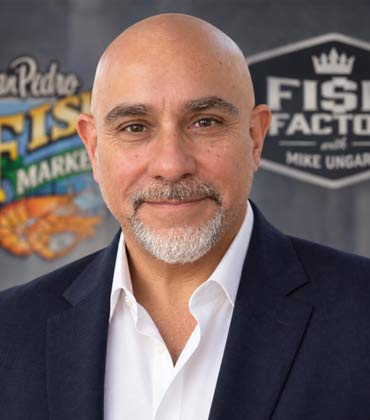
Michael Ungaro is CEO and Partner of San Pedro Fish Market, a third-generation seafood business on the Los Angeles waterfront founded by his family in 1956. Under his leadership, the company grew from roughly 10 million dollars to more than 30 million dollars in annual sales at a single location and produced the television series Kings of FI$H as well as the Fi$H Factor podcast. He speaks and writes on brand strategy, storytelling and leading legacy businesses through change.
Where Product Meets the Buyer
For most of my career, I have stood at the very end of a supply chain. My family's seafood market in San Pedro, California, has been selling fish on the Los Angeles waterfront since 1956. At our peak, we moved 200 tons of shrimp a year through one location and served about two million people annually. Trucks arrived every morning. Customers arrived every afternoon. I spent thirty years in the fifty feet between the two.
What I noticed from that spot, and what I think it means for anyone who moves product further up the chain, is that nobody orders your salmon by name. When a restaurant buyer places an order, the purchase order says ‘shrimp, 16/20, 40 pounds’ or ‘salmon fillets, skin on.’ The name of the farm, the processor, the brand or the distributor is typically overlooked. The buyer is ordering a size and a price. Everything that happened to that product between the water and the loading dock, every decision about handling, temperature, feed, certification and timing, is invisible at the moment the order is written.
Moving Beyond Price and Availability
The product arrives as a commodity because it was ordered as one. That is not a failure of the buyer. It is the natural state of any product whose story did not travel with it.
I learned this the hard way, on the demand side. For thirteen years, our business was flat at around ten million dollars a year. We worked hard. We bought well. We sold good fish at fair prices. Growth was two to three percent, and every competitor on the waterfront could say the same thing we said. We were a commodity, too.
“The brands likely to win the next decade in food are the ones whose story is still attached when the plate reaches the table.”
What changed was not the product or the logistics. We started telling the story of the product. We showed people the boats, the ice, the hands that cut the fish, the family that had been doing it for three generations. We put it on video, on social media and eventually on a television series. Over the next seven years, sales tripled at the same location, with no remodel and no major price increase. People drove past a half dozen other seafood restaurants to stand in a line two hundred yards long. They were not waiting for shrimp. They were waiting for our shrimp.
The lesson travels upstream. Every link in a supply chain faces the same choice we faced. You can be the thing the buyer orders by specification, in which case you compete on price and availability and nothing else. Or you can be the thing the buyer asks for by name, in which case the buyer absorbs some of the cost of getting it, because switching to a substitute is now a loss.
From Product Distribution to Demand Creation
There are three things that I would say to anyone who moves product for a living. First, the story is part of the product. Origin, handling and timing are competitive advantages only if the end customer knows about them. If the documentation stops at the receiving dock, so does the value. The brands likely to win the next decade in food are the ones whose story is still attached when the plate reaches the table.
Second, the operator is your distribution channel for meaning, not just for product. A chef who can say where the fish came from, and why it matters, is doing marketing for you at the exact moment of consumption. Most operators would do it if someone gave them the story in a form they could repeat. Almost no one does.
Third, demand is built at the end of the chain and pulled back through it. We spent decades waiting for suppliers to differentiate themselves. They never did, so the restaurant became the brand instead of the fish. That was good for us. For the producers who supplied us, it meant their product got sold under our name, at our margin, and could be replaced the day a cheaper substitute appeared.
I am not a logistics professional, and I will not pretend to understand the complexity of the systems that got two hundred tons of shrimp to our door every year without fail. I only know what happened at the end of them. The product arrived perfectly, on time, and anonymous.
The last part was the only part we could fix, and fixing it was worth more than everything else combined. If your product is still being ordered by size and price, the chain is working. The story is not. That is the part worth your attention next.
